First-timer rules (every culture agrees)
Shower before you enter. Sit or lie on a towel — always. Enter and leave quickly, the steam is shared property. Match the room's mood: a Finnish sauna may be silent, a Russian banya loud, a Korean jjimjilbang full of families — listen first, talk second. Leave your phone outside. Hydrate between rounds. And there is no prize for endurance: dizzy means out, now.
Löyly — the art of steam
Löyly is the Finnish word for the steam that rises when water hits the stones — and for the spirit of the sauna itself. Good löyly comes in waves: a ladle, not a bucket; water spread across the stones, not dumped in one spot; a pause between throws to feel the heat land. In Finland, whoever sits nearest the stove throws for everyone, and asks first.
Parenie — the venik ritual
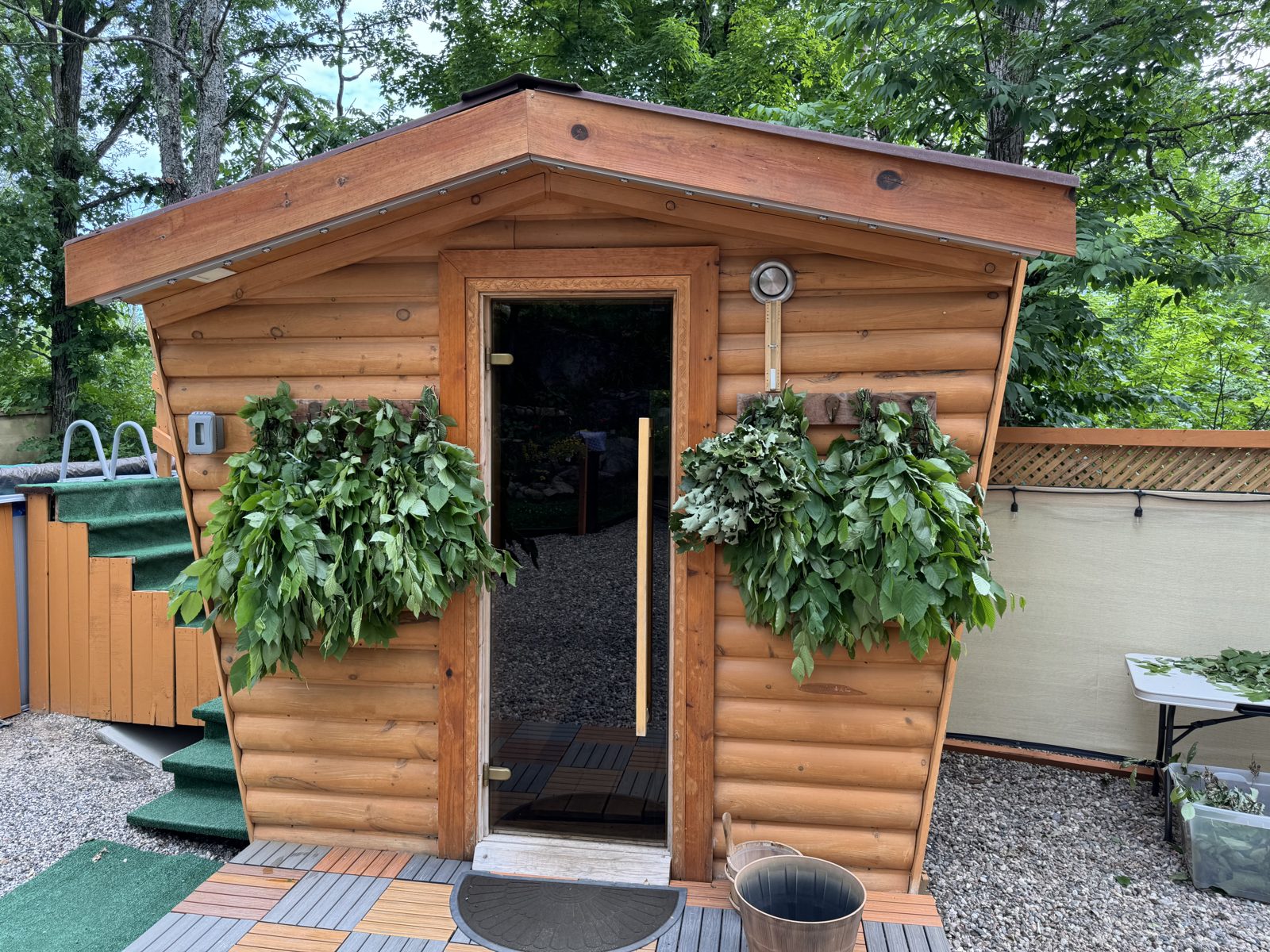
In the Russian and Baltic tradition, the venik — a whisk of birch or oak branches, soaked until fragrant — is the treatment. As I put it on TV: think of the whisks as "two big hot palms" — they press heat into you, they massage, they move the steam. A full parenie by a sauna master runs through warming, compressions, rhythmic whisking and exfoliation. After a proper session, as I said on the show, you have "not just new skin, a new body — a new soul." Watch the segment here.
Aufguss — steam as performance
The German-Austrian tradition turned the steam round into theatre: an Aufgussmeister pours water infused with essential oils onto the stones and drives the heat wave through the room with choreographed towel work, music and storytelling. There are world championships — and the discipline has now crossed the Atlantic: the USA held its first nationals at Bathhouse NYC, and Canada's were hosted at Thermëa in Ontario. Wellness guests here will expect rituals soon; venues that offer them will stand out.
Sources & further reading