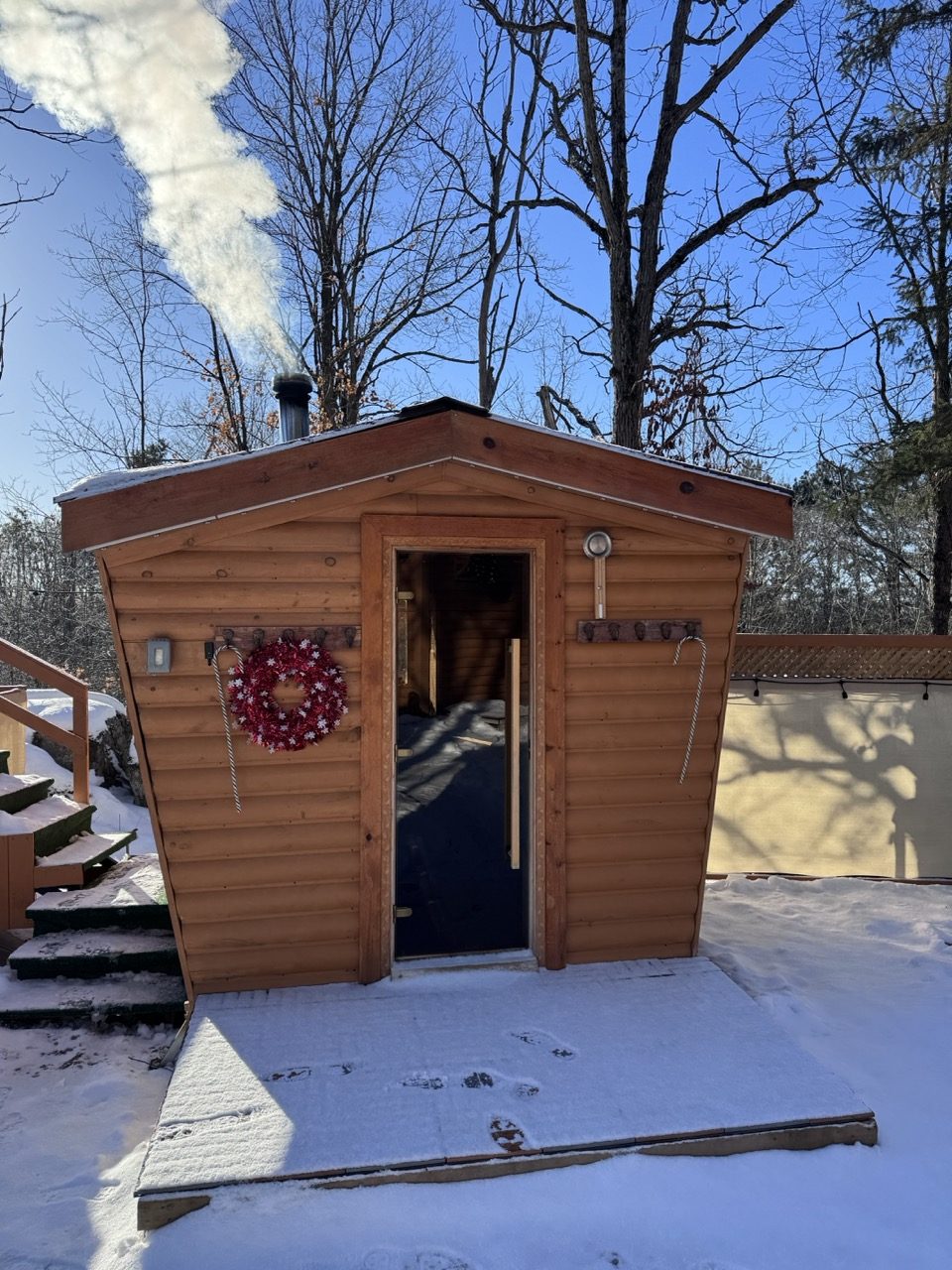
From locker rooms to backyards
Contrast therapy — sauna followed by cold immersion — moved from professional sport to the mainstream in just a few years. Industry analysts call it "the great thermal awakening": residential saunas now account for over 40% of sales in North America, and equipment makers sell sauna + plunge "thermal pairs" as a single product. In Canada we have a head start: a lake, a snowbank or a rain barrel has always been the original cold plunge.
What the research actually shows
A 2025 systematic review and meta-analysis in PLOS One (11 studies, 3,177 participants) found cold-water immersion reduced stress measured 12 hours after exposure and improved reported sleep quality and quality of life — but found no consistent evidence for the immunity and mood claims you see on social media. Harvard Health's summary is balanced: real benefits, modest evidence, real risks for the wrong hearts. Interesting detail: inflammation briefly rises right after cold exposure — that stress signal is part of how adaptation works.
A sensible protocol
The classic cycle, drawn from Finnish and Russian practice alike: 10–15 minutes of heat → 30–90 seconds of cold → 10 minutes of rest, repeated two or three rounds, always ending with rest (many traditions say end on cold; beginners should end warm and calm). Enter cold water slowly and keep your breathing controlled — the first 30 seconds of "cold shock" causes gasping, and that reflex is the actual danger, not the temperature itself.
Who should be careful
Sudden cold immersion spikes heart rate and blood pressure. Anyone with a heart condition, uncontrolled hypertension, or poor circulation should get medical advice before plunging — the sauna half of the ritual is the gentler half. Never plunge alone in open water, and never after alcohol.
Sources & further reading